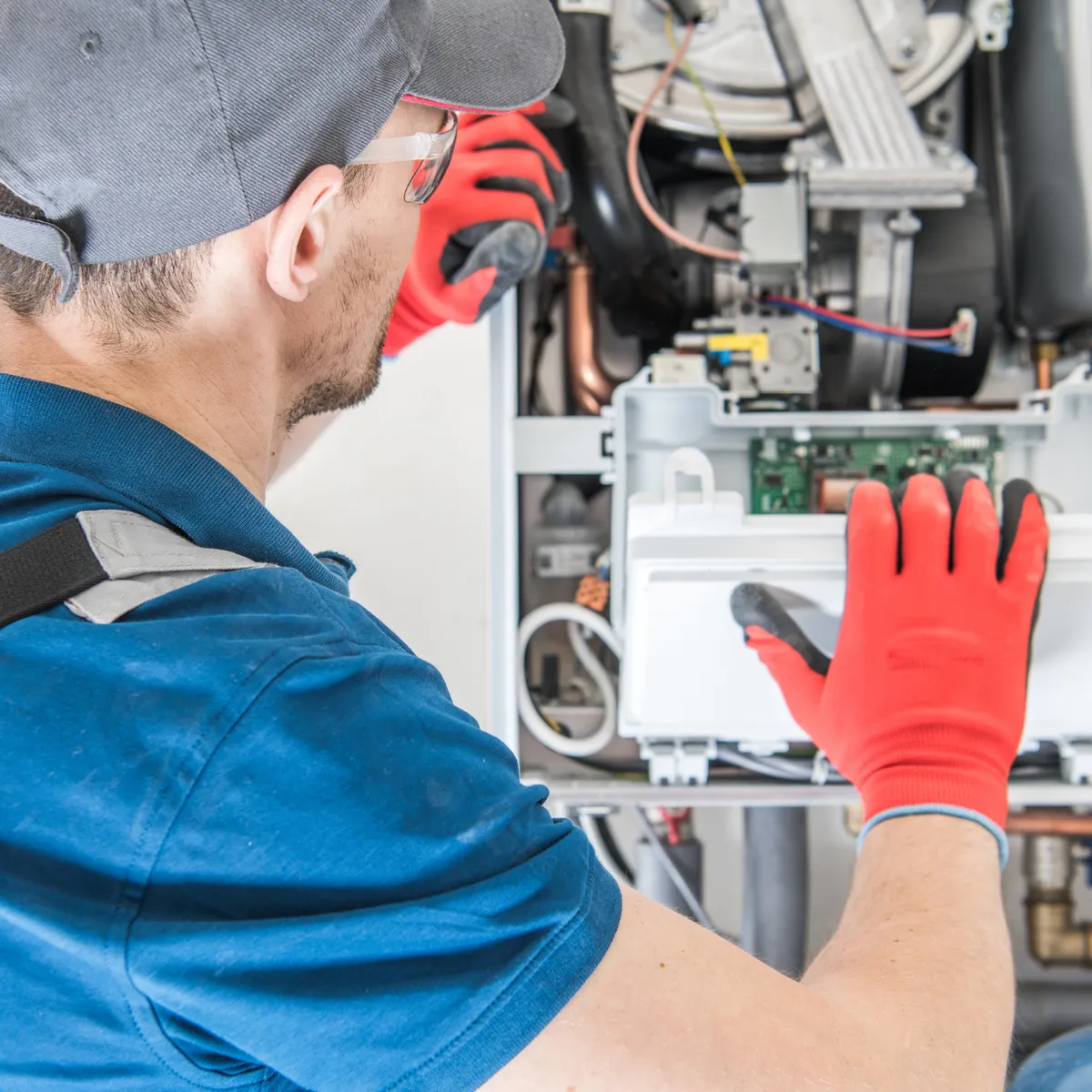
Request boiler service for a property in Cambridge. Include the equipment, the problem or planned work, and your location so the request can be reviewed.
What details help diagnose a boiler that is losing pressure or not heating?
A boiler that loses pressure, leaks, makes unusual noise, or leaves radiators or in-floor loops cold needs diagnosis suited to its design. Natural-draft cast-iron boilers and condensing modulating units have different combustion, venting, and condensate arrangements. Fuel type also matters: gas, propane, and oil equipment have distinct components and service requirements. The request can note the symptoms and boiler model; repair, maintenance, and replacement are separate decisions based on inspection findings.
Useful observations include where heat is missing, whether pressure changes, where water is visible, and when noise occurs. A service assessment may inspect ignition, circulator operation, zone valves, expansion tank, controls, and the pressure-relief discharge. Boiler type, fuel, venting design, and whether the system uses radiators or in-floor loops affect which readings and components are relevant.
Cast-iron and condensing boiler distinctions, fuels, and venting
Ignition, circulator, zone-valve, leak, and pressure diagnosis
Radiator or in-floor hydronics, maintenance, and replacement decisions
Assessment and Scope
Questions for the Proposed Work
01
Trace no-heat, leak, and pressure faults
Cold radiators or loops can result from ignition trouble, a failed circulator, a zone valve, or a control issue; those faults require different tests. Pressure loss or a dripping relief valve may involve the expansion tank, a leak, or another pressure-related condition. The boiler model and location of the symptom help narrow inspection. Fuel and combustion components should be evaluated by a service professional, not adjusted by occupants.
02
Treat noise and water condition as diagnostic evidence
Rumbling or uneven circulation can have more than one cause, including scale, trapped air, or deposits in the hydronic loop. Inspection should establish the noise location and assess system water, vents, flue condition, and signs of corrosion or sludge. Flushing or water treatment is not automatic; the boiler design, water condition, and manufacturer instructions determine whether either is appropriate and what scope is needed.
03
Compare repair, maintenance, and replacement separately
A specific ignition, circulator, or control fault may support repair when the rest of the boiler remains serviceable. Maintenance is a separate inspection of combustion, venting, water condition, and components, with work guided by findings and model instructions. Replacement merits comparison when deterioration, unsafe venting, recurring faults, or repair scope changes the outlook. Cast-iron and condensing boilers need different venting and condensate considerations in that comparison.
Compare the next step
Record whether the office emitter heats during the same call as other rooms in its zone. Ask whether the concern involves local delivery, balancing, room heat loss, or the boiler operation. Compare a targeted room correction with changes to central equipment using the actual workday comfort requirement and the effect on other rooms served by that zone.
Leave fuel, combustion, electrical, and pressure-system work to a qualified contractor. Do not adjust safety devices or repeatedly add water to a system with an unexplained leak or pressure loss.